
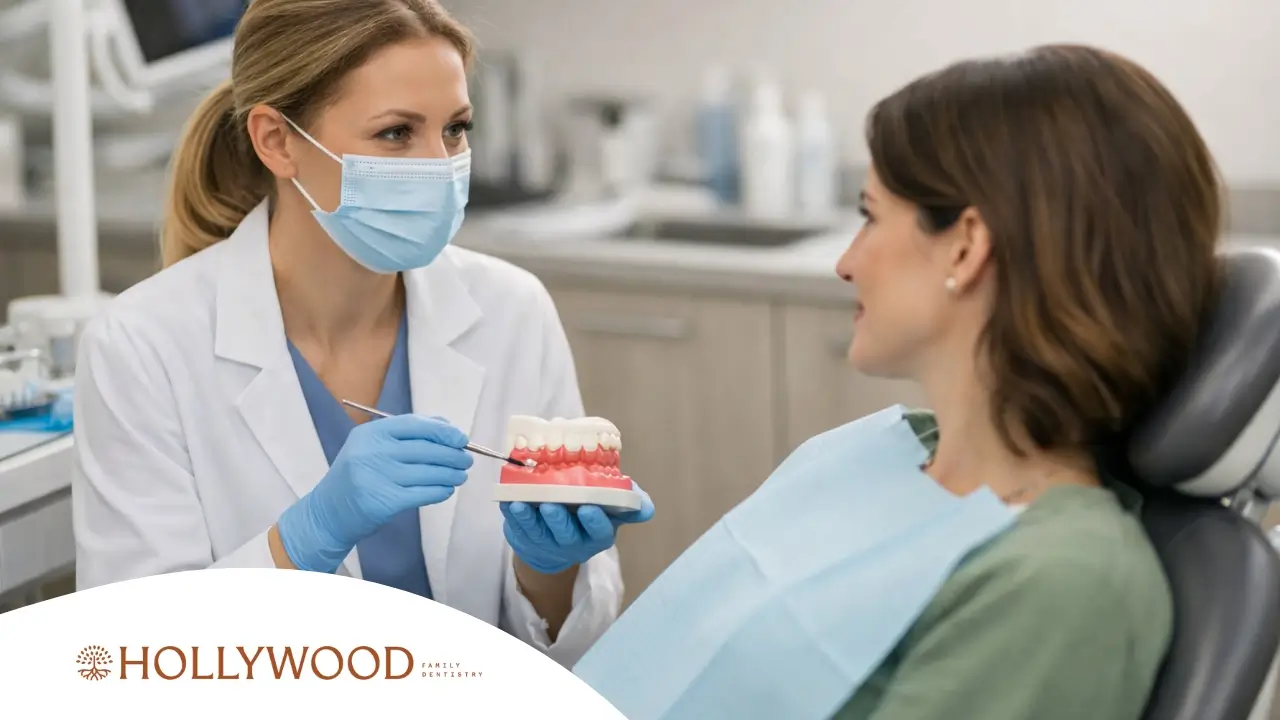
How Long Does a Periodontal Cleaning Take? This is one of the most common questions patients ask before scheduling gum treatment. Sitting in the dental chair can feel stressful when you don’t know how long the procedure will last or what will happen during the visit. The answer depends on the type of cleaning you need—routine periodontal maintenance or a deep periodontal cleaning for gum disease.
In this complete timeline guide, we break down how long a periodontal cleaning takes, what affects the duration, why some patients need deep cleaning, and what recovery looks like afterward. Whether you’re managing early gum disease or preparing for scaling and root planing, understanding the process helps you feel more confident and prepared before your appointment.
Why You Might Need a Deep Periodontal Cleaning
Dental professionals suggest deep periodontal cleanings whenever your gums display signs of advanced disease that standard cleanings don’t handle very well.
A sticky film of bacteria called plaque builds up on teeth and hardens into tartar, which leads to periodontal disease. The condition causes inflammation and infection in the tissues that hold teeth in place. The problem affects many Americans – about 47.2% of adults over 30 have chronic periodontitis.
Your dentist might recommend a deep cleaning after finding these warning signs:
- Gum pockets deeper than 4 millimeters
- Bone loss in your jaw
- Bleeding that won’t stop during brushing or flossing
- Gums that look swollen, red, or feel tender
- Gumline that exposes tooth roots
- Bad breath or unpleasant taste that won’t go away
- Teeth that feel loose or shift position
Deep periodontal cleanings work differently than regular cleanings. The process, known as scaling and root planing, reaches under your gumline to remove bacteria-filled tartar that brushing and flossing can’t reach. Tartar removal becomes crucial because it creates an ideal surface where more bacteria grow, which increases your risk of tooth decay and worsening gum disease.
Deep cleaning won’t cure periodontitis completely, but it helps treat symptoms and allows your gums to heal. Most dentists recommend this treatment first for mild to moderate gum disease, before considering more invasive procedures.
How Long Does Periodontal Treatment Take?
Your periodontal treatment time depends on how severe your gum disease is. A complete scaling and root planing procedure usually takes one to two hours. Your dentist can finish the treatment in one visit or split it into multiple appointments.
Most dental professionals treat half of your mouth in one appointment and complete the other half later. A skilled hygienist needs about 45-60 minutes to clean one-quarter of your mouth. This makes each session easier to handle and more comfortable, especially since local anesthesia helps with the process.
After your original treatment, your gums will heal in stages:
- Days 1-2: You might feel some discomfort
- First week: Your gums may feel sensitive
- Weeks 2-6: Cold foods and drinks might still cause sensitivity
- Weeks 4-6: Your gums should heal completely
The periodontal treatment extends beyond the cleaning procedure. Your dentist needs to schedule check-ups to track your healing progress. These follow-up visits are vital because bacteria can grow back within three months. Your dentist will likely suggest maintenance visits every three months until your gum disease is under control. After that, you might only need deep cleaning once or twice a year, with regular cleanings between these appointments.
Caring for Your Gums After the Cleaning
Proper aftercare is a vital part of your recovery from periodontal cleaning. You might feel mild tenderness and sensitivity that lasts a few days – this is completely normal. You can manage any discomfort with over-the-counter pain relievers like ibuprofen or acetaminophen.
You should start gently brushing with a soft-bristled toothbrush after 12-24 hours. Good oral hygiene remains important despite the sensitivity. Your gums might bleed slightly while brushing during the first 24-48 hours as tissues heal. A warm saltwater rinse (½ teaspoon salt in 8 oz warm water) 2-3 times daily helps reduce inflammation and speeds up healing.
Your diet should consist of soft foods for the first 24 hours after treatment. Spicy, acidic, hot, crunchy, or hard foods can irritate healing gums, so you should avoid them. Make sure you stay hydrated but don’t drink through straws because the suction can disrupt healing.
You need to avoid smoking for at least 48 hours since it substantially delays healing and reduces how well the treatment works. Desensitizing toothpastes like Sensodyne can help if you experience tooth sensitivity.
Note that periodontal disease needs ongoing management. After your healing period, you need regular follow-up appointments because bacteria can repopulate within about 90 days. Most dental professionals recommend maintenance visits every three months to manage periodontal disease effectively and prevent it from coming back.
Conclusion
How Long Does a Periodontal Cleaning Take? In most cases, periodontal maintenance visits last 45–60 minutes, while deep periodontal cleanings can take 1–2 hours and may be completed over multiple visits. The exact timeline depends on the severity of gum disease, pocket depth, and how much buildup needs to be removed below the gumline.
Healing typically occurs over 4–6 weeks, and long-term success depends on proper aftercare and regular follow-up visits every three months to prevent bacteria from returning. With consistent care, periodontal treatment can significantly improve gum health and help protect your teeth from future damage.
If you’re experiencing bleeding gums, bad breath, or have been told you need deep periodontal cleaning in Portland, professional care is essential. The experienced team at Hollywood Family Dentistry offers comprehensive periodontal cleaning services in Portland, including scaling and root planing tailored to your oral health needs.
Schedule your periodontal cleaning in Portland today and take the first step toward healthier gums and a stronger smile with trusted local dental care.
Crowns and Bridges | Tooth filling | Implants | Invisalign | Teeth Whitening | Veneers | Root Canal Treatment | Pediatric Dentist
