
Clear aligners have transformed modern orthodontic care, offering a discreet and flexible alternative to traditional braces. Since their introduction in the late 1990s, clear aligner systems have helped millions of adults and teens straighten their teeth without metal brackets or wires. In 2026, clear aligners continue to be one of the most requested orthodontic treatments, especially among adults who want results without disrupting their lifestyle. This overview of ‘Clear Aligners Explained’ will guide you through the essentials.
This complete guide explains clear aligner treatment from start to finish—how aligners work, what the treatment process looks like, benefits and limitations, and how clear aligners compare to braces. Whether you’re just starting to explore orthodontic options or preparing for treatment, this article will help you make an informed decision.
In this article, we will provide a comprehensive overview in our section titled ‘Clear Aligners Explained’.
What are clear aligners and how do they work?
Clear aligners represent a modern approach to orthodontic treatment. These custom-made transparent trays fit your teeth precisely and straighten them through an advanced combination of materials science, biomechanics, and digital technology.
Definition and materials used
Clear aligners are orthodontic devices that snugly fit over your teeth. They are made from transparent, BPA-free plastic. Invisalign, the most prominent brand, uses a patented material called SmartTrack. The company engineered this material after testing hundreds of options to ensure flexibility, durability, and effectiveness. Other aligners typically contain medical-grade polyurethane or ethylene vinyl acetate. The manufacturing relies on CAD/CAM (computer-aided-design and computer-aided-manufacturing) software and rapid prototyping techniques called stereolithography. These methods create aligners that balance durability and subtlety while staying nearly invisible.
How they move teeth gradually
Bone remodeling allows clear aligners to guide teeth into new positions by applying gentle, constant pressure. The process works this way:
- The aligners push teeth in specific directions, creating pressure on one side of the root
- On the compressed side, cells called osteoclasts break down small amounts of bone
- On the opposite side, osteoblasts deposit new bone tissue to stabilize the tooth’s position
Your teeth shift gradually without damaging the jawbone through this continuous cycle. Each aligner moves teeth approximately 0.25 to 0.3 millimeters. You wear it for one to two weeks before moving to the next tray. The aligners need 20-22 hours of daily wear to maintain consistent pressure and prevent teeth from shifting back.
Role of attachments and digital planning
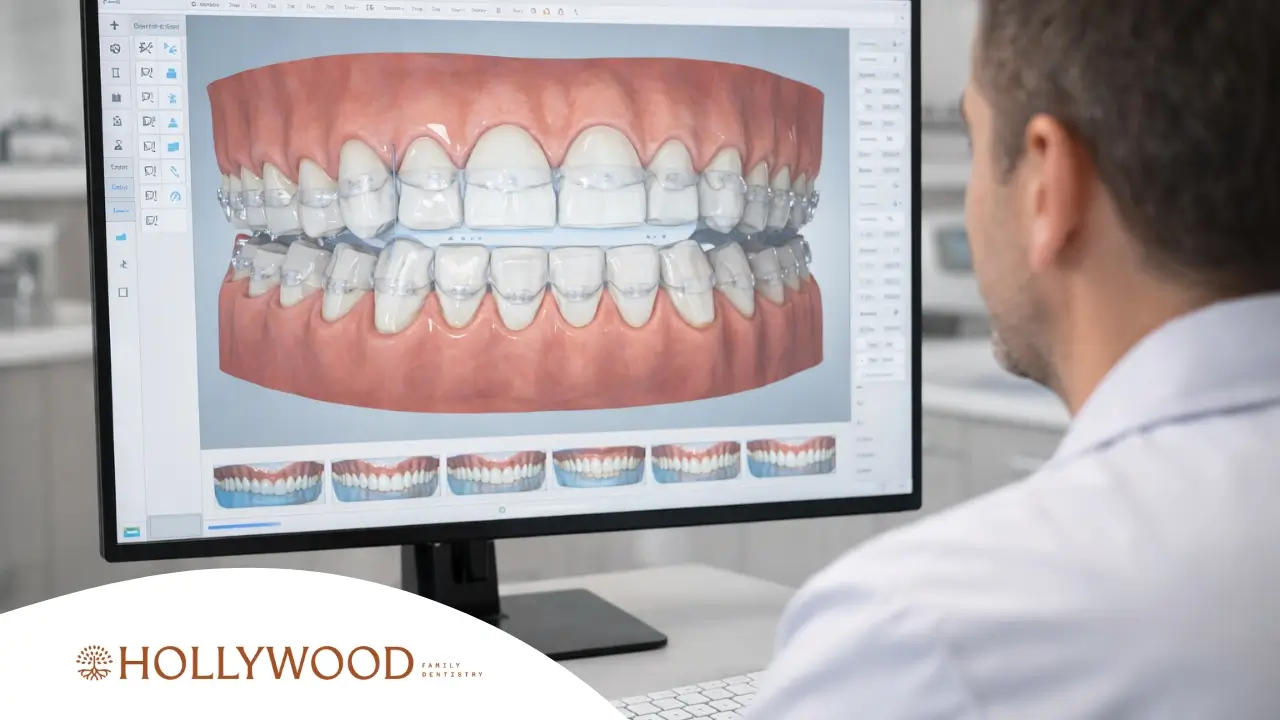
Digital planning creates the foundations of clear aligner treatment. Your orthodontist takes detailed 3D scans of your teeth instead of traditional molds. They create a detailed treatment plan with specialized software like ClinCheck that maps every movement from start to finish.
Many cases need small, tooth-colored attachments bonded strategically to certain teeth. These attachments serve two vital purposes – they give aligners better grip on teeth for increased precision and make complex movements possible, like rotation, extrusion, and root control. These small composite bumps stay virtually invisible while making treatment more efficient. These attachments have evolved from simple retention aids to precisely designed elements that optimize specific movements on individual teeth.
Benefits and limitations of clear aligner treatment
Clear aligners have become popular among many orthodontic options today because of their unique benefits and modern approach to teeth straightening. All the same, patients should think about certain limitations before they begin treatment.
Esthetic and comfort advantages
Clear aligners are nearly invisible when worn because of their transparent nature. This solves esthetic concerns many patients have about traditional orthodontics. Patients who use clear aligners report higher satisfaction scores for esthetics (8.7 ± 1.2 vs. 5.4 ± 1.8) and comfort (8.2 ± 1.5 vs. 4.9 ± 1.6) compared to traditional braces. The smooth, custom-fitted design reduces irritation to cheeks and gums that metal brackets often cause.
Oral hygiene and lifestyle flexibility
The removable nature of clear aligners gives patients great oral health benefits. Regular brushing and flossing routines stay simple without fixed appliances getting in the way. This easy access reduces white spot lesions that often develop with traditional braces. More benefits include no food restrictions—you can enjoy all your favorite foods by taking out your aligners during meals.
Limitations for complex cases
But clear aligners don’t work for everyone. They don’t deal very well with vertical discrepancies or jaw growth changes. Traditional braces remain a more reliable option for severe malocclusions or complex orthodontic problems. Understanding these limitations is vital as these devices grow in popularity, helping patients make informed treatment decisions.
Importance of patient compliance
Patient discipline determines the success of clear aligner treatment. Patients must wear aligners 20-22 hours daily to get desired results. Studies reveal only 36% of patients follow through completely during treatment. Male patients show slightly better compliance than females, and patients without previous orthodontic work typically stick better to wearing schedules. Electronic reminders help reduce poor compliance, which matters since irregular wear lengthens treatment time and might affect outcomes.
The clear aligner treatment process explained
Your trip to a straighter smile starts with a well-laid-out process that changes your teeth step by step. The clear aligner treatment follows a carefully arranged path from your first visit to the final results.
Original consultation and 3D scans
A complete consultation determines if clear aligners will work for you. Your orthodontist will check your teeth, talk about your goals, and answer your questions about the treatment process. Modern clear aligner treatment uses advanced iTero scanners that create detailed 3D images of your teeth within minutes. This digital scanning feels more comfortable and gives better precision for improved appliance fitting.
Aligner manufacturing and delivery
Your orthodontist creates a custom treatment plan with sophisticated software like ClinCheck after capturing your digital impressions. The technology maps every tooth movement from the first aligner to the final position. Your doctor’s input and the software arrange each tooth’s movement in the right sequence and timing. The custom aligners are manufactured through thermoforming techniques on 3D printed models or direct 3D printing with biocompatible resins.
Wearing schedule and progress tracking
The best results come when you wear your aligners 20-22 hours daily and remove them only to eat, drink, and clean your teeth. You will switch to new aligners every 1-2 weeks based on your orthodontist’s instructions. Regular check-ups happen every 6-8 weeks to monitor your progress. These visits let your orthodontist compare your current tooth positions with the treatment plan and make needed adjustments.
Refinements and mid-course corrections
Teeth sometimes move differently than planned, and you might need more aligners to achieve the desired results. These adjustments need new digital scans and additional aligners to perfect your smile. Research shows that 26.4% of patients need mid-course corrections during their first series of aligners. Cases with extractions often need more adjustments, with 41.3% requiring mid-course corrections compared to 14.8% in non-extraction cases.
Clear aligners vs braces: which is right for you?
The choice between clear aligners and traditional braces depends on your specific needs and lifestyle.
Treatment effectiveness comparison
Clear aligners work well for mild to moderate alignment issues, while traditional braces remain the gold standard for complex orthodontic problems. A systematic review showed no major difference in overall treatment effectiveness between these options. Traditional braces showed better results when producing adequate occlusal contacts and controlling teeth torque. Clear aligners offer one key advantage – patients finish their treatment faster than those with braces.
Cost and insurance considerations
The price tag plays a big role in choosing between these orthodontic options. Traditional braces cost between $2,500-$6,000, while clear aligners range from $3,000-$8,000. Many dental insurance plans cover both treatments equally, with coverage up to $3,000. Patients without adequate insurance can use flexible monthly payment plans and HSA/FSA accounts to manage their costs.
Suitability for different age groups
Clear aligners benefit both teens and adults. The American Association of Orthodontists reports that adults make up nearly 25% of orthodontic patients. Teens see faster results because their skeletal structure grows actively. Adult treatments might take longer.
Clear aligners before and after results
Clear aligners treat various conditions like overbites, underbites, crossbites, crowding and spacing effectively. Treatment usually takes 6-18 months based on case complexity.
Conclusion
Clear aligners offer a modern, discreet, and flexible way to straighten teeth without traditional braces. In 2026, they remain a trusted orthodontic option for patients seeking comfort, convenience, and predictable results.
While clear aligners are effective for many cases, they require discipline and may not be suitable for all orthodontic needs. Costs, treatment time, and lifestyle preferences should all be considered when making a decision.
If you’re exploring clear aligner treatment in Portland, the team at Hollywood Family Dentistry provides personalized consultations and clear aligner services tailored to adult patients.
Schedule a clear aligner consultation in Portland today and take the first step toward a healthier, more confident smile.
Crowns and Bridges | Tooth filling | Implants | Invisalign | Teeth Whitening | Veneers | Root Canal Treatment | Pediatric Dentist
