
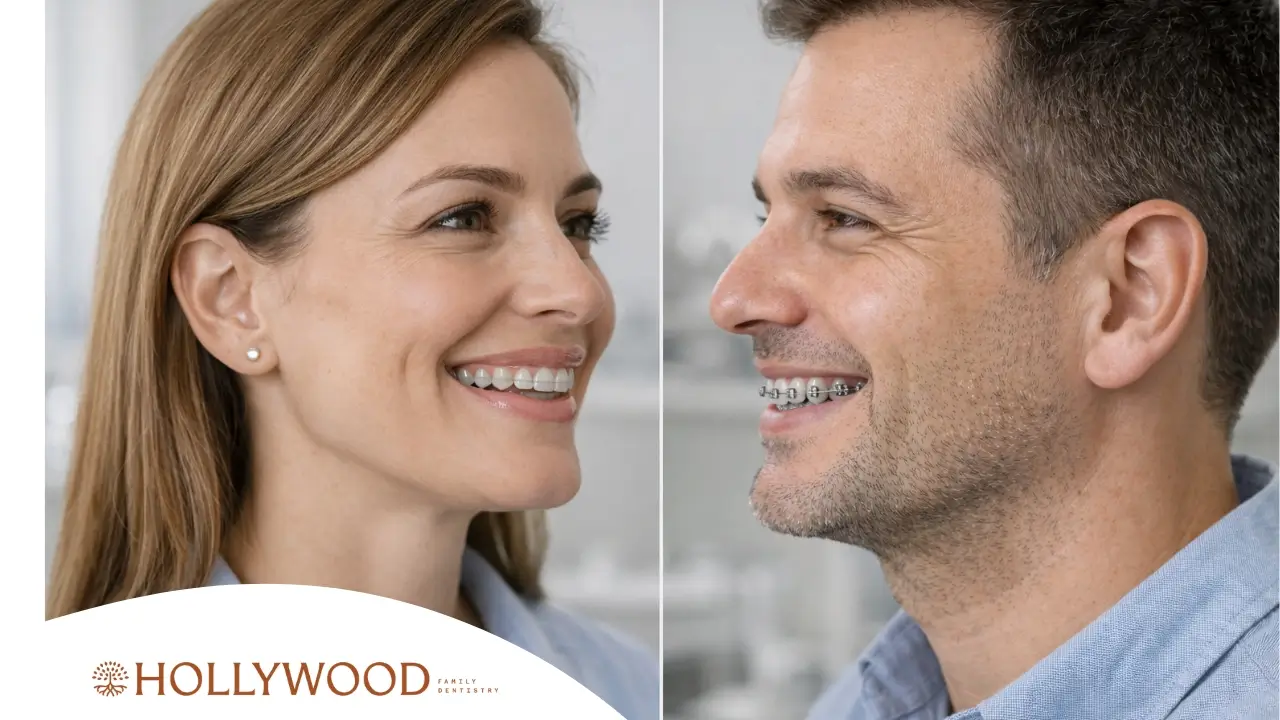
Choosing between Invisalign vs braces is one of the most common decisions Oregon adults face when considering orthodontic treatment. Both options are proven, effective ways to straighten teeth—but they fit very different lifestyles, comfort preferences, and dental needs.
In recent years, clear aligners like Invisalign have become increasingly popular among adults who want a discreet and flexible solution. At the same time, traditional braces remain a trusted and reliable option for correcting complex alignment and bite issues. This guide breaks down Invisalign vs braces for adults in Oregon, covering how they work, costs, comfort, treatment time, and which option may be right for you in 2026.
What Invisalign and Braces Have in Common
Despite their different appearances, Invisalign and traditional braces rely on the same biological process to straighten teeth.
How Both Treatments Move Teeth
Both Invisalign and braces apply gentle, consistent pressure to guide teeth into better alignment over time. This pressure affects the periodontal ligament, which connects the teeth to the jawbone.
- Bone is gradually broken down on one side of the tooth
- New bone forms on the opposite side
- Teeth shift into healthier, aligned positions
This process—called bone remodeling—occurs with both treatment options and is safe when monitored by a dental professional.
FDA Approval and Safety
Both Invisalign aligners and traditional braces are FDA-approved orthodontic treatments. Invisalign has been cleared for use since 1998 and continues to receive updates as technology advances. This ensures materials, design, and treatment protocols meet strict safety standards.
Conditions Both Can Treat
Both Invisalign and braces can address:
- Crowded teeth
- Gaps between teeth
- Overbites and underbites
- Crossbites
Eligibility depends on overall oral health. Cavities, gum disease, or infections usually need to be treated before starting orthodontic care.
Pros and Cons of Invisalign for Adults
Adults who think about orthodontic treatment should know that Invisalign comes with unique benefits and some limitations that need a closer look.
Discreet appearance and comfort
Invisalign’s best feature is how invisible it looks. The clear aligners blend naturally with your teeth, so you can straighten your smile without drawing attention to your treatment. Many adults choose this subtle option when they want to look professional at work or in social settings. The smooth plastic material also irritates your gums and cheeks much less than metal brackets and wires from traditional braces. You’ll find eating, speaking, and smiling more comfortable throughout your treatment.
Removability and food freedom
Invisalign aligners are completely removable, unlike fixed braces. This makes a huge difference because you can eat all your favorite foods. Traditional braces don’t let you eat popcorn, bagels, apples, candy, or anything hard or sticky. With Invisalign, you just take out your trays before meals, eat what you want, and put them back in afterward. Adults love this freedom because their treatment doesn’t get in the way of enjoying food.
Oral hygiene benefits
Taking care of your teeth is much easier with Invisalign. You can brush and floss normally because the aligners come out – no need to work around wires and brackets. This helps prevent plaque buildup, tooth decay, and gum disease that sometimes happen with traditional braces. Most patients end up with better dental health during and after their treatment.
Limitations for complex cases
Invisalign can’t fix every orthodontic problem. You might need traditional braces for severe bite issues, major tooth rotations or complex alignment problems. Technology has improved what Invisalign can do over the last several years, but a few certain complicated cases still work better with conventional braces. Your orthodontist will review your specific case to see if Invisalign is right for you.
Discipline required for success
Success with Invisalign depends on your commitment. The aligners must stay in your mouth 22 hours each day. Taking them out longer than the suggested 2 hours can slow down progress or affect your results. You’ll also need to form new habits about removing aligners before meals and keeping them clean.
Pros and Cons of Traditional Braces
Metal braces have been the life-blood of orthodontic treatment for decades. They offer both major benefits and clear drawbacks compared to newer options like Invisalign.
Effective for complex dental issues
Traditional braces excel at handling complex orthodontic issues. They work well with severe misalignment, overcrowding, large gaps, and challenging bite problems (like overbites, underbites, and crossbites). Patients with serious jaw misalignments can benefit from braces paired with tools like elastics or expanders that gradually reposition the jaw. Clear aligners can’t match these capabilities.
No need to remember to wear them
Fixed braces are a huge advantage. Once installed, they work non-stop and apply constant pressure to move teeth into the right positions. This permanent attachment will give a consistent treatment 24/7 without worrying about patient compliance. You won’t need to think about wearing them or risk losing them.
Visible appearance and discomfort
Metal brackets and wires stand out when you smile or speak, which can make people feel self-conscious. Braces can also cause discomfort, especially after adjustments. The pressure needed to move teeth often leads to soreness.
Food restrictions and hygiene challenges
Keeping your mouth clean becomes much harder with braces. Food particles get stuck around brackets and wires, which raises the risk of plaque buildup, cavities, and gum problems. Your diet needs changes too. You’ll need to avoid:
- Sticky foods like caramel and taffy
- Hard items such as nuts, popcorn, and ice
- Crunchy foods including raw vegetables and hard taco shells
Cost and Treatment Time Comparison
Making an informed decision about orthodontic treatment depends on understanding how much you’ll spend and how long it will take.
Average cost of Invisalign vs braces
The cost of orthodontic treatment depends on several factors. Oregon residents can expect to pay between $5,000 to $6,500 for Invisalign, while traditional braces cost $3,000 to $7,500. The price gap exists because clear aligners use specialized technology and custom designs. Your final cost depends on how complex your case is. Simple alignment needs cost less, but cases with severe misalignment cost more.
Insurance coverage differences
The good news is dental insurance plans often cover both Invisalign and traditional braces equally. Most insurance plans pay about 50% of orthodontic costs, with lifetime limits between $1,000 to $3,000. OrthoFi data shows patients get an average coverage of $1,772, and 92% qualify for up to $3,000 in coverage. You should check your benefits before starting treatment because some dental plans don’t cover orthodontics for adults over 18.
Treatment duration for each option
You’ll spend less time with Invisalign than traditional braces. Most people complete their Invisalign treatment in 12-18 months. Traditional braces take longer, usually 18-24 months. A clinical study from the National Library of Medicine found that Invisalign treatments finished faster (18 months) than conventional braces (24 months). This time difference matters a lot to professionals and people with active social lives.
Follow-up visits and adjustments
Each treatment option has its own schedule for checkups. Invisalign users see their orthodontist every 6-8 weeks to track progress and get new aligners. People with traditional braces need more frequent visits, usually every 4-6 weeks. Fewer office visits with Invisalign work better for busy adults who have packed schedules.
Conclusion
When comparing Invisalign vs braces, there’s no one-size-fits-all answer. Invisalign offers discretion, comfort, and flexibility, making it a strong choice for many Oregon adults. Traditional braces remain the most reliable solution for complex orthodontic cases and patients who want consistent, hands-off treatment.
Cost, lifestyle, treatment length, and dental complexity all play a role in your decision. Understanding these factors helps you move forward with confidence and realistic expectations.
If you’re considering Invisalign or braces in Portland, the team at Hollywood Family Dentistry provides personalized orthodontic consultations to help adults choose the right treatment path.
Schedule a consultation for Invisalign in Portland today and take the next step toward a healthier, more confident smile.
Crowns and Bridges | Tooth filling | Implants | Invisalign | Teeth Whitening | Veneers | Root Canal Treatment | Pediatric Dentist
